The source of the problem
On 19 November 2026, my WhatsApp Business app told me that a Meta artificial intelligence agent would now suggest replies to my customers. Seven episodes to understand what happens to a startup when the platform it builds on becomes its competitor, and what it should have watched before getting started.
Episode 1 : The afternoon message
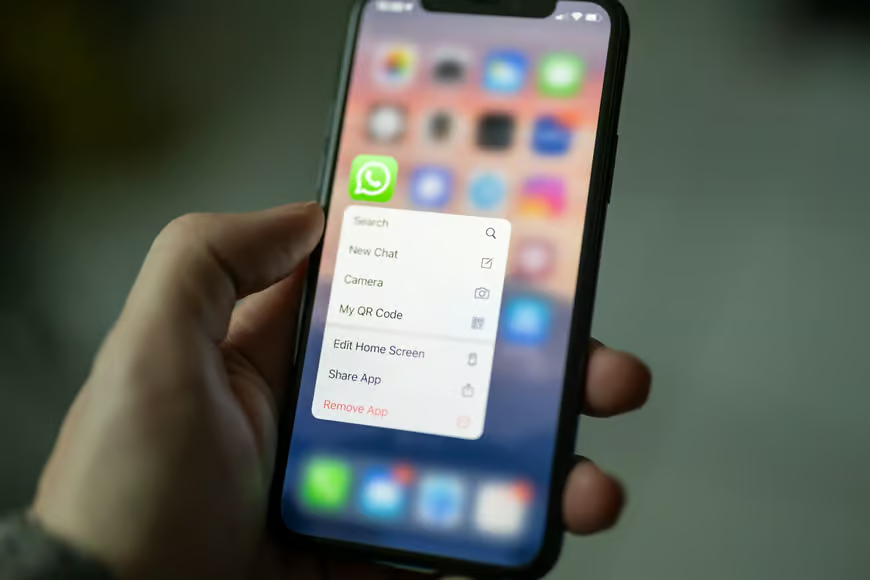
On Thursday 19 November 2026, in the afternoon, my WhatsApp Business app sent me a message. It did not come from a customer. It came from Meta. “I’m online and I’m starting to suggest replies in chats!” Further down, the agent explained that when customers write to me, it will draft a reply that I can send, edit or ignore. It offered to let me teach it what my business does, and to think of it as a new assistant I can train.
This message is called Meta Business Agent. Meta presented it on 3 June 2026 in London, at its Conversations conference, devoted to WhatsApp. According to Reuters, more than a million businesses were already using earlier versions of this agent on WhatsApp and Messenger. It answers customers’ questions, recommends products, books appointments, qualifies prospects and hands over to a human when the request gets complicated. At launch, access was free, and paid subscriptions were announced for the following months. Naomi Gleit, head of product at Meta, summed up the ambition in one sentence reported by Reuters: “This is definitely an enterprise play”.
I read this message, and I thought of someone who does not exist yet, but who surely exists somewhere.
Imagine. You have a startup. The problem you are trying to solve is building an app powered by artificial intelligence that answers customers and handles the whole flow of messages for a shop. You plug your artificial intelligence into the app everyone uses. You make money, you have new customers, prospects, everything is going well. And then one fine day, the app you are plugged into decides to create its own artificial intelligence to do exactly the work you were doing. Bam. Right in the face.
You find yourself competing with the source of the problem.
That is the sentence I want to follow for seven episodes. Not to say that Meta has no right to build an agent. A company improves its products; that is its job. I want to understand something else: what happens to the little one when the ground it builds on belongs to someone who can become its competitor overnight. And what it should have looked at before laying the first brick.
A note on method. I do not know of any specific African startup that has closed because of this agent, and I will not invent one. The character at the start is a textbook case. The facts that follow come from the press, competition authorities and official statements, which I cite at the end.
Episode 2 : The owner of the ground
Before the agent, there were the rules.
In October 2025, WhatsApp changed the terms of use of its business solution, the interface that thousands of companies use to plug their tools into the messaging app. A new chapter targeted what the terms call “AI providers”: providers of large language models, generative AI platforms or general-purpose AI assistants. They could no longer use the solution when this technology was their main functionality, rather than an incidental one. Who decided what was main or incidental? Meta, “in its sole discretion”, according to the text quoted by TechCrunch. The ban was to apply to everyone from 15 January 2026.
The first targets were well known. OpenAI’s ChatGPT, Perplexity, Luzia, Poke: assistants you could reach like a contact, by sending a message to a WhatsApp number. OpenAI confirmed that its WhatsApp contact would stop working after 15 January. TechCrunch summed up the consequence in one line: Meta AI was becoming the only assistant available in the app.
Meta gave its reason. According to a spokesperson quoted by TechCrunch, the business interface is there to help businesses support their customers and send them useful information. General-purpose assistants had created a load and support needs the company had not anticipated. Businesses that use AI for their customer service, for their part, remained allowed.
These two decisions have to be read together, the one from October 2025 and the one from June 2026. The first shuts the door on assistants competing with Meta AI. The second shuts nothing: startups that sell customer service agents keep the right to exist on WhatsApp. But they now have, in the same app, a competitor that belongs to the owner of the app, that is installed at their customers’ with no download, and that started out free.
That is what I call the owner of the ground. You can build your house on rented land. You can even do good business there. But the owner keeps three powers you do not have: he writes the rules, he can change them, and he can open the same shop as you on the ground floor.
Episode 3 : An old script
What is happening today on WhatsApp is nothing new. The software world even has a word for it.
In 2002, Apple released Sherlock 3, the search tool of its Mac OS X 10.2 system. It took over many of the functions of Watson, a piece of software sold by a small company, Karelia Software, which let you query web services from the Mac desktop. Watson lost market share. Watson’s defenders accused Apple of copying it without permission or compensation; others disputed that reading. The debate remains open. The word, however, stuck: when a platform builds in for free what a developer used to sell, in English we say that developer has been “Sherlocked”.
Since then, the list has grown with every Apple annual conference. The specialist press cites call recording apps, when the iPhone learned to record calls itself, or screen time tracking apps, when the system built in its own.
The script has a more brutal variant: the platform does not copy, it cuts off. In January 2023, apps that let people read Twitter other than through the official app, such as Tweetbot or Twitterrific, stopped working almost overnight. Twitter then explained that it was enforcing its access rules, and later changed its terms to ban these competing clients. Companies that had lived for years on this interface had to close or reinvent themselves.
These stories are not African. But African startups are, more than others, built on other people’s platforms. A large share of the continent’s commerce goes through WhatsApp. The studies that put a figure on this share often come from companies that sell services around WhatsApp, so I will not repeat their percentages. You only have to open your phone in Algiers, in Brazzaville or in Nairobi to see that shops, delivery riders and online sellers live there.
When your customer, your sales channel and your technical supplier are the same player, you do not have a partner. You have a landlord.
Episode 4 : The regulators arrive afterwards
You might think the law protects the little one. Sometimes it does. But it arrives afterwards, and it protects what it is able to see.
Italy moved first. On 24 December 2025, the Italian competition authority ordered Meta to immediately suspend WhatsApp’s new terms, finding that they completely excluded Meta AI’s competitors from the assistants market. Meta responded by exempting Italian numbers from the ban. On 13 January 2026, the Brazilian competition authority, CADE, in turn ordered the rule suspended and opened an investigation.
Africa followed. In February 2026, the Competition and Consumer Protection Commission of COMESA, the Common Market for Eastern and Southern Africa, opened an investigation into Meta. It covers the twenty-one member states of this community. According to the Kenyan press, the complaint came from a Ugandan organisation, AdLegal. The question raised is one of abuse of a dominant position: did Meta close off access to third-party AI developers while keeping its own?
Then Europe struck harder. On 9 June 2026, the European Commission imposed interim measures on Meta: reopen, within five working days, WhatsApp access to competing AI assistants, on the terms in force before 15 October 2025, that is, for free. In the meantime, according to the Commission’s press release, Meta had revised its rule on 4 March 2026 to make this access paid. Teresa Ribera, Executive Vice-President of the Commission, justified the decision as follows: “In rapidly evolving markets, competition can be lost long before a final decision is adopted”. Meta announced it would appeal and spoke of regulatory overreach.
I take three things from this chronology.
The first: nearly eight months separate the October 2025 rule from the European interim measure, and the full investigation continues. A seed-stage startup cannot always hold out for eight months without revenue.
The second: these decisions protect general-purpose assistants, those of large companies such as OpenAI or Perplexity. They say nothing about the customer service agent that Meta offers to merchants. Building a better product than one’s suppliers is not forbidden. Competition law protects access to the market, not each player’s market share.
The third, the most uncomfortable: Italy, Brazil and the European Union have authorities capable of imposing interim measures on an American company. COMESA has opened its investigation, and that is real progress. But Algeria, where I live, and Congo-Brazzaville, where I come from, are not members of COMESA. For many founders on the continent, the protection of the law exists on paper, far away, or not at all.
Episode 5 : Watching before the first line of code
That is why, when I think about it, the most important thing before getting started, especially in the age of artificial intelligence, is neither the logo, nor the domain name, nor even the prototype. It is technology watch.
You have to ask yourself a simple question, and answer it honestly: has someone already started investing in the field I want to go into? And above all, is that someone the one I depend on?
In the case of Meta’s agent, the signals were public. According to TechCrunch, Meta had tested its agent in countries such as India and Mexico before opening it to the whole world. More than a million businesses were already using earlier versions before the June 2026 announcement. The October 2025 rules already said that Meta was determined to keep control of AI in its messaging app. None of this was secret. You had to read it.
Here is the watch I recommend to anyone building on someone else’s platform:
- Read the platform’s terms of use, and above all their changes. A new chapter in a contract is often the announcement of a strategy.
- Follow the platform’s conferences. Meta, Apple, Google present every year what they are going to build in. What is announced as a test in one country often becomes a global product.
- Look at what the platform is testing elsewhere. A pilot country in Asia or Latin America can announce what will reach us a year later.
- Ask yourself whether the problem you are solving is a problem of the platform itself. If it is, the platform will probably end up solving it.
This last point is the hardest to accept. Managing customer messages on WhatsApp is a WhatsApp problem. A startup that solves it is in fact proving that there is a market. It is doing the market research for free for the owner of the ground.
Watching is not about giving up. It is about knowing what you are getting into, and investing your time, your sleepless nights and your money with your eyes open.
Episode 6 : The barrier to entry
If the watch shows that the giant may come, the question becomes: what will it not be able to copy easily? Economists call it the barrier to entry. For a startup facing a platform, you need one; otherwise you are exposed, and if you are exposed, you are in hot water.
A barrier to entry is not an idea. An idea can be copied. It is something that is expensive, slow or complicated to reproduce, even for a company with immense resources.
African commerce offers a few. Payment, first. A conversational agent that answers well is not enough for a merchant in Nairobi or Abidjan: you have to collect payment, in mobile money, by card, sometimes in cash on delivery, then reconcile these payments with the accounts. The Kenyan outlet TechTrendsKE thus tells the story of Chpter, a Kenyan company that started as a WhatsApp automation tool and today offers payments and order management, plugged into the M-PESA interface and into local banks. Message automation can be copied by Meta. Banking integrations and local agreements, country by country, much less quickly.
Then logistics, delivery, tracking, returns. Then knowledge of a specific sector: pharmacy, insurance, real estate, public administration, with their rules and obligations. A general-purpose agent knows how to answer everyone. A specialised tool knows what a pharmacist is not allowed to say.
And there are languages. The press presented Meta’s agent as able to work in local languages. Some African observers, such as the Nigerian outlet Innovation Village, believe it is more at ease in English, French, Portuguese and Arabic than in many of the continent’s languages. I do not have the means to settle that debate here. I only note that depth in a language, in its accents, its mixtures, its ways of talking at the market, is built slowly, with speakers, and cannot be bought in one conference.
None of these barriers is eternal. But each one turns a punch into a negotiation. Someone who has nothing the giant cannot do in a quarter does not have a business. He has a deadline.
Episode 7 : Orange, MTN and the fear of getting started
Everything I have just described concerns Meta. It would be too easy to turn it into a story of American giants against small Africans.
Here too, there are owners of the ground. Telecom operators own the network, the SIM card, often the mobile money wallet, and the relationship with millions of subscribers. Imagine you invest heavily in a service, and one fine day, I don’t know, Orange or MTN arrives in your market and sweeps up everything. I am not citing a specific case. I am describing a risk that every founder who depends on an operator should look squarely in the face, exactly like the one who depends on WhatsApp.
I admit it: all this scares me. The level of watch it takes today to launch a startup is insane. Months of work, sleepless nights, and one day a competitor whose size exceeds anything you could ever raise arrives in your market. And then you have to find alternatives, change course, smooth things over.
I run LOBAKA, a voice infrastructure company in African languages. So I am not a neutral observer of this question. I ask it of myself, with the questions from episode 5.
My conclusion is not to do nothing. It comes down to three sentences. Before building, look at who owns the ground. While you build, keep an eye on what they are preparing. And build something they will not be able to reproduce in a quarter.
Be careful, young one. Be careful. I hope your technology watch is up to scratch.
And you: what platform does your project rest on, and what would happen if it decided tomorrow to do your job in your place?
Sources
- TechCrunch, Meta’s agent for WhatsApp Business available worldwide (3 June 2026): https://techcrunch.com/2026/06/03/metas-ai-agent-for-whatsapp-business-is-now-available-globally/
- Reuters, via The Star, Meta enters the enterprise AI race (3 June 2026): https://www.thestar.com.my/tech/tech-news/2026/06/03/meta-enters-enterprise-ai-race-with-new-business-agent
- Techeconomy, launch of Business Agent at Conversations 2026: https://techeconomy.ng/meta-launches-business-agent-customer-service-whatsapp-instagram-messenger
- TechCrunch, WhatsApp changes its terms to exclude general-purpose assistants (18 October 2025): https://techcrunch.com/2025/10/18/whatssapp-changes-its-terms-to-bar-general-purpose-chatbots-from-its-platform/
- 9to5Mac, WhatsApp bans AI assistants from its business interface: https://9to5mac.com/2025/10/20/whatsapp-bans-ai-chatbots-from-using-its-business-api/
- Italian competition authority, interim measures against Meta (24 December 2025): https://en.agcm.it/en/media/press-releases/2025/12/A576
- Storyboard18, Meta exempts Italy from the ban (13 January 2026): https://www.storyboard18.com/brand-marketing/meta-exempts-italy-from-whatsapp-ai-chatbot-restrictions-after-regulator-steps-in-87515.htm
- TechCrunch, Brazil orders the rule suspended (13 January 2026): https://techcrunch.com/2026/01/13/brazil-orders-meta-to-suspend-policy-banning-third-party-ai-chatbots-from-whatsapp/
- Tech-ish, the COMESA investigation into Meta (23 February 2026): https://tech-ish.com/2026/02/23/comesa-historic-antitrust-probe-meta/
- Business Daily Africa, the COMESA investigation and local assistants: https://www.businessdailyafrica.com/bd/corporate/technology/comesa-s-meta-probe-raises-local-ai-bots-control-stakes--5369462
- European Commission, interim measures against Meta (9 June 2026): https://europa.eu/newsroom/ecpc-failover/pdf/ip-26-1276_en.pdf
- AP, via WTOP, the European Union orders Meta to reopen WhatsApp (June 2026): https://wtop.com/europe/2026/06/eu-orders-meta-to-restore-whatsapp-access-for-rival-ai-chatbots/
- App Developer Magazine, the origin of the word “sherlocked”: https://appdevelopermagazine.com/sherlocked-the-controversial-practice-of-apple-copying-apps/
- Wikipedia, Sherlock (software): https://en.wikipedia.org/wiki/Sherlock_3
- TechCrunch, the cut-off of Twitter’s third-party clients (16 January 2023): https://techcrunch.com/2023/01/16/twitters-third-party-client-issue-is-seemingly-a-deliberate-suspension/
- BGR, Twitter officially bans third-party apps like Tweetbot and Twitterrific (January 2023): https://bgr.com/tech/twitter-officially-bans-third-party-apps-like-tweetbot-and-twitterrific/
- TechTrendsKE, African commerce in WhatsApp and Chpter’s journey (11 March 2026): https://techtrendske.co.ke/2026/03/11/africa-whatsapp-commerce/
- Innovation Village, what WhatsApp’s agent changes for African SMEs (5 June 2026): https://innovation-village.com/whatsapp-now-has-an-ai-business-agent-here-is-what-african-smes-need-to-know/
Keep reading
- Next textSix countries, six musicsSunnubang names six countries of origin. Each one keeps a music that UNESCO has inscribed as intangible cultural heritage of humanity. Seven episodes, from Algiers to Brazzaville, to ask a question that looks simple: does inscribing a music protect it or freeze it?Series · 7 episodes · 22 min read
- Go deeperWhy low-competition ecosystems discourage innovationEntrepreneurial torpor is usually explained by fear, mistrust, culture. But a variable that accounts for everything predicts nothing. Fear is not a character trait: it is a price.Series · 7 episodes · 68 min read
- ExtendThe price of entryStarting a company has always meant buying skills you lack, which means raising capital before you know whether the idea holds up. Seven chapters on how artificial intelligence changes that equation — and why a founder with no capital can welcome it without being naive about what it threatens.Series · 7 chapters · 38 min read



Related Africa Tech episodes
Host of Africa Tech, Nzamba and Umuzi on Ifrikya FM, Algeria's pan-African radio station. Founder of Lobaka, co-founder of Sunnubang, creator and author of BAKOKO.
Follow the analyses by RSS (in French)